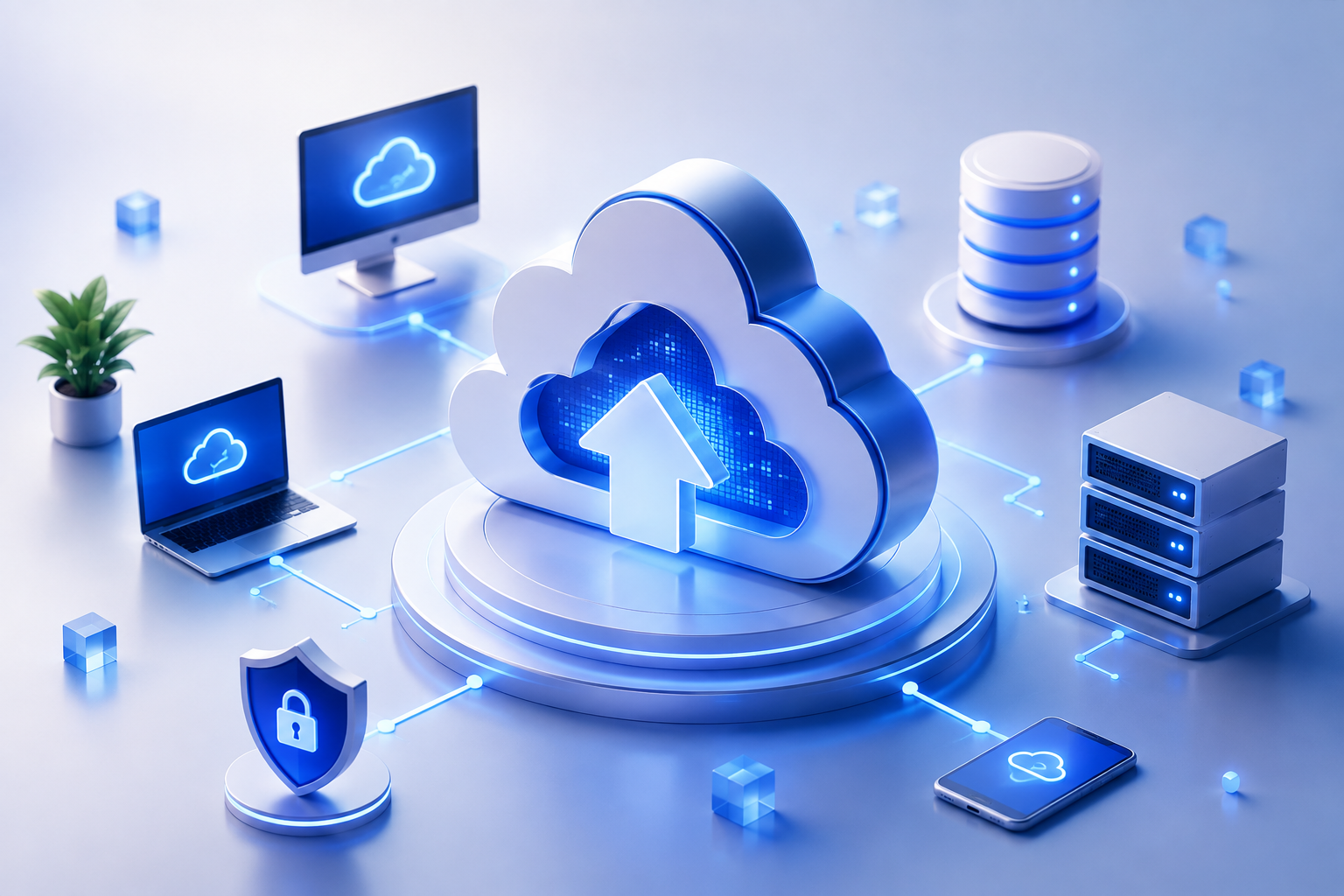
Cloud solutions give businesses access to technology resources through internet-connected infrastructure. When planned carefully, cloud services can simplify everyday operations, support flexible working and help organisations adapt as their technology requirements change.
What Are Cloud Solutions?
Cloud solutions are technology services delivered through remote computing infrastructure rather than relying entirely on equipment located inside a business premises.
Depending on business requirements, cloud services may include file storage, applications, databases, virtual servers, collaboration platforms, backup systems and other computing resources.
Why Are Cloud Solutions Important for Small Businesses?
Small businesses often need technology that can grow without creating unnecessary complexity. Cloud-based services can provide flexible access to tools and resources while reducing dependence on individual local systems.
Cloud solutions may help businesses:
- Access important tools from multiple locations
- Support remote and hybrid working
- Improve collaboration between team members
- Scale technology resources as requirements change
- Reduce reliance on individual physical devices
- Support backup and business continuity planning
- Manage selected applications through central platforms
Cloud Storage and File Access
Cloud storage allows authorised users to store and access files using internet-connected services. This can make it easier for teams to share documents and access information from approved devices and locations.
Appropriate permissions, account security and backup policies should be considered when businesses use cloud storage for important data.
Cloud Migration
Cloud migration is the process of moving selected applications, workloads, files or services from existing systems to cloud-based infrastructure.
A successful migration should begin with an assessment of current technology, business requirements, application dependencies, data requirements and potential operational risks.
Businesses do not necessarily need to move every system at once. Migration can be completed in stages depending on technical and business priorities.
Cloud Scalability
One of the useful characteristics of many cloud platforms is the ability to adjust resources as requirements change.
A growing business may need additional storage, computing capacity, user accounts or applications over time. Cloud services can often be expanded without requiring the organisation to replace its entire technology environment.
Cloud Security
Moving technology to the cloud does not remove the need for security. Businesses still need appropriate account management, access controls, strong authentication practices, software updates and data protection policies.
Cloud security is a shared responsibility. The cloud provider manages certain parts of the infrastructure, while businesses remain responsible for correctly managing their users, configurations, permissions and information.
Cloud Backup and Business Continuity
Cloud-based backup can form part of a broader business continuity strategy by maintaining additional copies of selected data outside primary business systems.
A backup strategy should consider what information needs protection, how frequently copies are created, how long they are retained and how data can be restored when required.
Public, Private and Hybrid Cloud
Public Cloud
Public cloud services use infrastructure operated by a cloud service provider and shared across multiple customers through separated environments.
Private Cloud
Private cloud environments are designed for a single organisation and may provide greater control over specific configurations and infrastructure requirements.
Hybrid Cloud
Hybrid cloud approaches combine different environments, allowing businesses to keep selected systems in one location while using cloud services for other workloads.
Choosing the Right Cloud Solution
There is no single cloud setup that is suitable for every business. The right approach depends on existing systems, security requirements, budget, number of users, applications and long-term business goals.
Before implementing a cloud solution, organisations should consider:
- Which applications and data need cloud access
- Who needs access and from where
- Security and compliance requirements
- Backup and recovery expectations
- Current internet and network reliability
- Future growth requirements
- Ongoing management responsibilities
Planning Cloud Technology for Long-Term Growth
Cloud adoption should be treated as an ongoing technology strategy rather than simply moving files or applications online.
Regular reviews of user access, storage usage, security settings, costs and system performance can help businesses maintain an environment that continues to support their needs.
Frequently Asked Questions
What are cloud solutions for businesses?
Cloud solutions allow businesses to use computing resources, applications, storage and other technology services through internet-based infrastructure.
Can small businesses use cloud services?
Yes. Cloud services can support businesses of different sizes and can be selected according to individual operational and technology needs.
What is cloud migration?
Cloud migration is the process of moving selected applications, workloads, files or services from existing systems to cloud-based infrastructure.
Are cloud solutions scalable?
Many cloud platforms allow businesses to increase or reduce selected resources as requirements change.
Planning Your Cloud Strategy?
Techno E solutions provides cloud planning, migration and infrastructure services designed around individual business requirements.
Discuss Your Cloud Requirements →